
Education Briefs
In a unanimous ruling in early March, the U.S. Court of Appeals for the 5th Circuit affirmed that teachers have a “right to pray” on school grounds. The American Center for Law and Justice (ACLJ) represented teacher Staci Barber, who was forbidden by her principal at Cardiff Junior High in the Katy Independent School District in Texas to pray where students might see her. The case, Barber v. Rounds, began when principal Bryan Scott Rounds told Barber that the school district “prohibits employees from praying with or in the presence of students.” He added that even if no students were present, teacher prayer was off limits. As reported by WorldNetDaily, after praying at the school flagpole the previous three years without incident, Barber and a few fellow teachers prayed despite Rounds’ order, and were physically stopped when he interrupted them and pulled them into a conference room where he repeated his directive: “Teachers may not pray where students ‘might see’ or ‘be influenced by’ their conduct.” The ACLJ called the 5th circuit’s ruling “sweeping,” noting that it reiterated a 2022 Supreme Court ruling in Kennedy v. Bremerton School District, which established that someone engaging in “personal prayer outside of official duties is doubly protected by both the Free Speech Clause and the Free Exercise Clause of the First Amendment.”
New research from the National Home Education Research Institute (NHERI) shows that 62% of peer-reviewed and/or representative-sample studies over a period of 30 years “have revealed a positive effect for the homeschooled students compared to institutionally schooled students.” While NHERI acknowledges that “neither scholars nor advocates claim homeschoolers always excel or that research proves causation—focus is on consistent positive trends”—its research debunks the false claims of opponents that studies showing homeschooled students generally perform better are flawed. Mark Quann, financial expert, author, and Founder and CEO of The Perfect 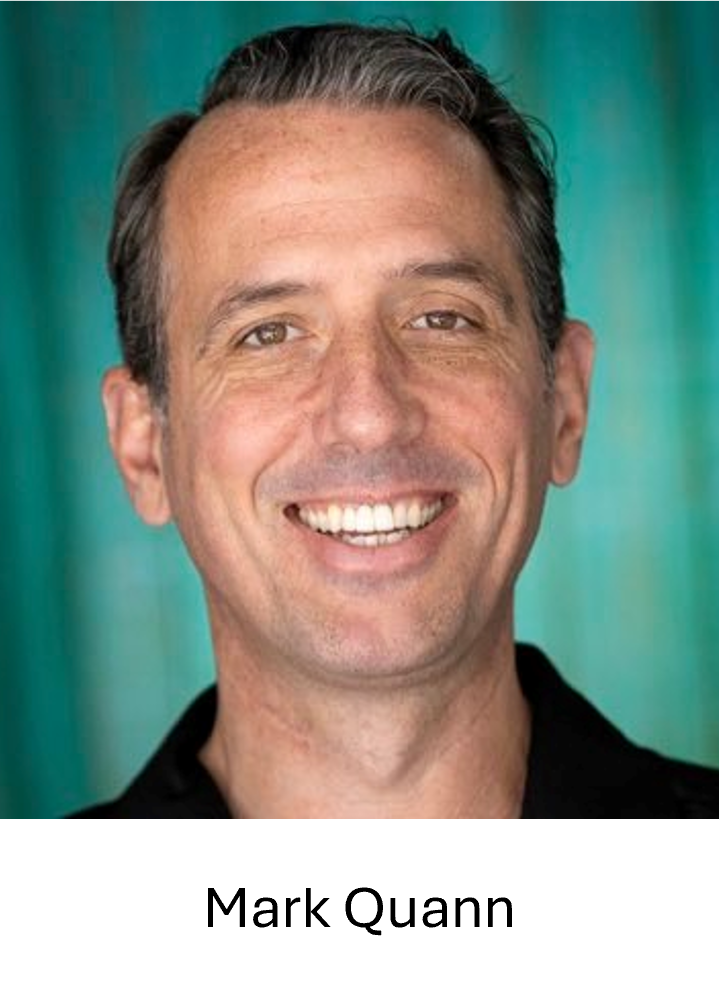 Portfolio, a division of REMii Group Inc., recently posted on X that NHERI’s research further shows “homeschool students typically score 15-25 percentile points higher on standardized tests, and about 78% of peer-reviewed studies show homeschool students outperforming traditional school students academically.” But what really surprised Quann were the first-person encounters he had with students when he was teaching homeschoolers “a financial literacy course through Classical Learner.” He met a 14-year-old running a business with 9 employees, and a 9-year-old whom he taught the Buy, Borrow, Die strategy allegedly used by “the ultra-wealthy.” Quann observed that the homeschooled students, rather than memorizing facts for tests, “were thinking, building, and solving real problems.” He added: “The great news for America is that roughly 7.8% of American children are now being homeschooled, and that number continues to rise as families look for education that prioritizes curiosity, entrepreneurship, and independent thinking.”
Under Governor Gavin Newsom’s watch, the state of California’s gender definition ultimately resulted in the Supreme Court’s review and ruling in Mirabelli v. Bonta. (See High Court Rules Against Schools Pushing Transgender Secrecy in this issue of Education Reporter). On March 8, the New York Post published an op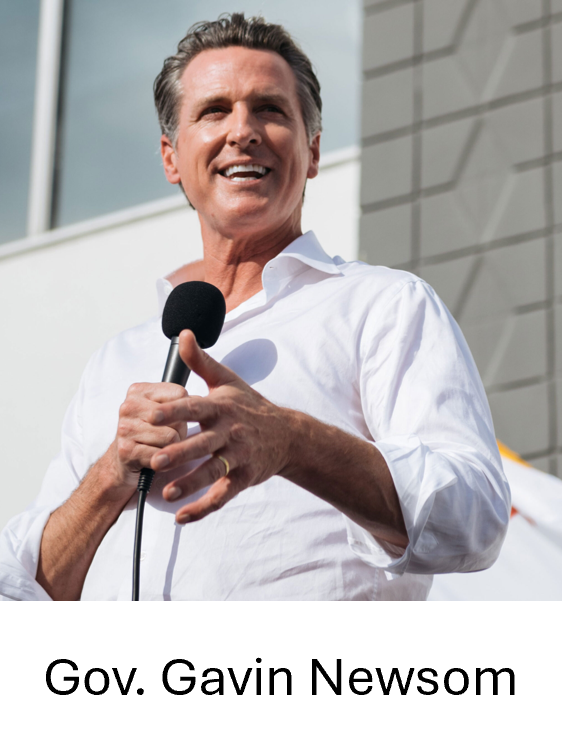 ed by Thomas More Society Special Counsel, Paul Jonna, who explained that three years ago, Governor Newsom labeled policies that provided for parental notification of a child wishing to change his or her gender identity “an assault on the trans community.” Now, in the wake of the Supreme Court’s decision to require such notification, the governor is claiming “teachers will be ‘forced to be gender cops.’” Jonna described California’s definition of gender identity as “the most absurd, circular definition imaginable”; meaning “an individual’s stated gender identity without regard to any contrary statement by any other person, including a family member.” Thus, “the policies and legal directives enforced by the State of California” under Newsom, required teachers to “unhesitatingly accept” a student’s assertion of his or her gender identity and only inform the parents if the student consented. In other words, teachers throughout the state were required to hide a child’s gender identity at school. Newsom called parental involvement in this area “policing,” which Jonna noted most people would call “parenting.” After the ruling, Newsom whined that it “undermines student privacy,” but, as Jonna observed, “thankfully, the U.S. Supreme Court rejected that premise entirely. The court found that California had ‘cut out the primary protectors of children’s best interests: their parents.’”
Want to be notified of new
Education Reporter content?
Your information will NOT be sold or shared and will ONLY be used to notify you of new content.
Click Here
Return to Home Page