
Growth of Charters Adds to Public School Chaos
A recent news headline warned that a “scheme” unleashed by the charter school industry could spell “the death of public schools.” This dramatic pronouncement was followed by a lengthy description of how for-profit charter school companies are taking over public-school buildings and usurping funds in Florida, where new laws are making such moves possible. The article claims similar actions are taking place in other red states with more likely to follow.
Public-school proponents assert that, as if this outrage weren’t enough, charter-school test results are mixed at best, with many charters failing to raise student achievement. While the truth varies from charter to charter, some conservatives consider the pot may be calling the kettle black after decades of nationwide decline in test scores among traditional public-school students.
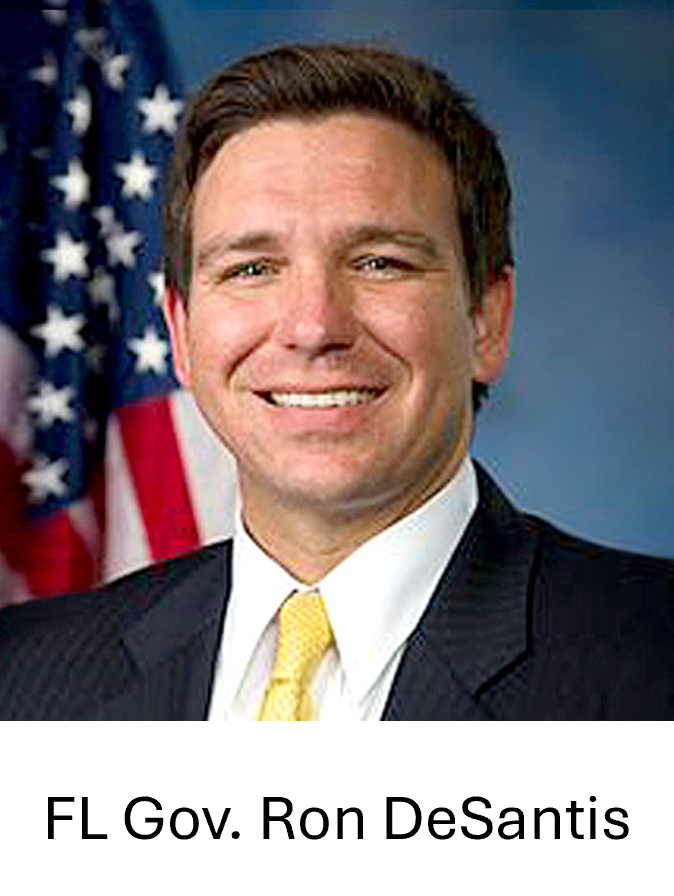 The Florida bill in question (SB 2510), passed the state legislature last June and was signed into law by Governor Ron DeSantis in July. It expands the Florida “Schools of Hope” program established in 2017 to serve children in areas with “persistently low-performing” traditional public schools.
The new law changed the criteria for determining whether a school qualifies as persistently low-performing, which opens the door for more charter schools to move in regardless of a public school’s performance status. Additionally, the law allows schools of hope to use vacant public-school buildings or to share space with partially occupied public schools. Several for-profit charter companies have claimed space in dozens of existing public schools as of December 2025, and intend to open their doors beginning in August 2027.
DeSantis is a strong proponent of the Schools of Hope model, and his preferred vendor is the Success Academies, which are located primarily in the New York City area but are expanding to Miami. Success Academies are known for operating in low-income areas where many traditional public schools are under performing, and their students have reportedly achieved a significant measure of academic success.
The Florida Policy Institute (FPI), a pro-public school advocacy group, declared in November that at Least 690 "Letters of Intent" had been sent to public schools in Florida by multiple charter school operators. FPI opposes the new law and the expansion of charter schools, claiming they take funds away from traditional public schools while using public-school services such as buses and food service.
FPI complains that “once the charter occupies part of the public school, it operates rent free....” A spokesperson cut to the chase, defining the expansion of the schools of hope concept as being “on a slippery slope, much like school vouchers have been in the state.”
Dark side of charters
While many charter schools are more focused on academics and less committed to indoctrination (see Education Reporter, January 2024), others fail to improve student performance and may even be more woke than their traditional public-school counterparts. A case in point came to light recently in the aftermath of the controversial death of “ICE Watch Warrior” Renee Nicole Good in Minneapolis, when as the New York Post described it, she “veered her car toward” a federal agent and was subsequently killed.
 The Post reported that Good “linked up with anti-ICE activists through her 6-year-old son’s woke charter school, which boasts that it puts ‘social justice first’ and prioritizes ‘involving kids in political and social activism.’” Good and her “wife” were said to be “raising the boy together in the mostly working-class, activist-heavy neighborhood of south Minneapolis, which features tree-lined streets and a large number of homes with windows decked out in LGBTQ+ flags or signs depicting George Floyd.”
The article explained: “It was through her involvement in the [Southside Family Charter] school community that Good became involved in ‘ICE Watch’ — a loose coalition of activists dedicated to disrupting ICE raids in the sanctuary city.” The Post noted that the school touts itself as providing “an academically challenging, socially conscious education to diverse learners,” and declares it is “proud” to offer what it calls a “social justice curriculum.”
How academically sound the Southside Family Charter school may be is unclear, but the website leaves no doubt that its main focus is on politically motivated social justice activism. The website states that the curriculum “challenges students to think critically and take action in their communities. Through field trips and travel study, students engage with local organizations and real-world issues, deepening their understanding of social justice and inspiring them to make a positive impact.”
While charter schools such as Southside foster civil unrest, a minority operate under foreign influence. At least one group was found to have middle eastern terrorist connections, and some charters are sponsored by China. (See Education Reporter, March 2022.) Nonetheless, charter schools continue to be a player in the U.S. education system.
Indiana empowers charters
In a move that is stirring up controversy to rival that of Florida, officials in Indianapolis have developed a proposal to close struggling traditional public schools and provide charter school students with bus service. A December article by The 74 charged that the proposal, if enacted, would create “a powerful new government agency, the Indianapolis Public Education Corporation, handing charters a measure of control over citywide education decisions they have never had.” In Indiana, “corporation” is the legal term for school district.
The 74 pointed out that along with gaining bus service for students, charters would have representatives on a new 9-member board with “equal standing to district officials for the first time in shaping Indianapolis school policy.” Some of the city’s public schools would be closed, and charters are already benefitting from a shift in property taxes away from traditional public schools.
Predictably, the proposal is under fire from a variety of groups. Many city residents believe such a fundamental shift should be decided by the voters, with the 9 board members elected by the voters rather than appointed by the mayor. Three of the board members would be chosen from the elected Indianapolis Public Schools board, but the mayor would appoint the remaining 6.
Interestingly, one of the most vocal groups protesting the proposed unelected board is “the Central Indiana Democratic Socialists of America,” which purports to believe in free and fair elections.
But not all charter-school advocates support the plan either. A spokesperson for the Indiana Charter Innovation Center posted on social media: “The proposals put forward would place significant burdens on charter schools without providing funding, would reverse major legislative progress, and would create a structure that pulls decision-making farther from the schools and families most affected.” Other charter school proponents have generally expressed support for the legislation.
 An article in Chalkbeat Indiana explains that the city’s action was prompted by recommendations of the Indianapolis Local Education Alliance (ILEA), the most critical of which involved the authority to control and manage school property, as well as to establish and oversee a transportation plan to transport all students within Indianapolis Public Schools boundaries — the two primary goals lawmakers had for the work of the [ILEA].
Critics say it represents “a significant shift of power ... the district would lose its authority to levy and collect property taxes or issue debt, powers that would instead go to the new corporation.” The corporation would also “establish and manage a unified enrollment system, as well as a single school performance framework.” Chronically low-performing schools would be closed. Currently, the Indianapolis Public Schools (IPS) has approximately 9,000 empty desks and faces a budget deficit that will require a tax increase from voters.
Indianapolis Mayor Joe Hogsett has expressed support for the ILEA’s recommendations, asking only that local Indianapolis voices “remain at the forefront” of the conversations at the state legislature. Whether or not the new bill passes without significant changes remains to be seen, but most local education leaders believe something needs to be done.
Charters on the move
Although charter school opponents emphasize that the growth of charters has stagnated and even declined slightly in some areas, many states are making it easier for charters to operate.
ZNetwork reports, for example, that Ohio’s 2025 state budget includes a provision that “allows the state to force school districts to close some public-school buildings and sell those properties to charter or private schools at below market value.” In Arkansas, a measure similar to Florida’s “Schools of Hope” is in the works.
A K-12 Dive article found that, according to a 2025 S&P Global Ratings report, the outlook for charter schools overall is stable, with many “holding their market position or expanding while continuing to have healthy liquidity and operating margins.”
The sad reality is that public schools have failed miserably to prepare children for success in an American society that remains free and for the most part still rewards academic excellence. Public school enrollment continues to decline, with many classrooms and even whole school buildings sitting empty, due in part to an anemic birth rate, but primarily because many parents are pulling their children out. Parents send their children to school to learn, not to be indoctrinated by leftwing zealots hell-bent on creating political activists.
As an alternative, charter schools overall may not be the answer, but they are included under the banner of “school choice,” and they provide a beacon of hope for desperate parents unable to homeschool or afford private schools. Some are exactly that, while others are little better than the traditional public schools these parents have abandoned.
With the U.S. Department of Education poised to hand the reins of educational autonomy back to the states, the chaos in public education, including charters, will likely increase before it gets better. For parents who are homeschooling and those whose children are being educated in private schools or microschools that reflect their beliefs, little will change. For those whose children continue to languish in public schools, a fastening of seatbelts is likely in order.
Want to be notified of new
Education Reporter content?
Your information will NOT be sold or shared and will ONLY be used to notify you of new content.
Click Here
Return to Home Page