
‘Critical Literacy’ Commands Feelings, Not Comprehension
A lamentable twist in the ongoing subversion of children’s ability to read and comprehend is use of the buzzwords, “critical literacy.” When parents or casual observers hear this term, they doubtless believe it means something positive, such as students learning to think critically about what they read.
Nothing could be further from the truth. A video titled How Modern Schools Make Terrible Writers (Deliberately), posted by author and researcher, Hilary Layne on her “Second Story” YouTube channel, explains that “critical literacy” is a misnomer, and that the removal of phonics was done on purpose to prevent children from becoming critical thinkers in the true sense of the word. This is old news for many, but wider use of the “critical literacy” moniker is new, and intended to create the false illusion that actual literacy is being taught.
Phyllis Schlafly was among those who recognized that the enduring goal of “education reformers” was to transform the development of true literacy into the process of conditioning children to be triggered by feelings rather than an understanding of what they read. They accomplished their goal largely by replacing systematic phonics instruction, the sure means of teaching reading — English is a phonetic language — with whole language and other novelties.
 The late Charlotte Iserbyt’s monumental work, The Deliberate Dumbing Down of America, published in 1999, provided a documented “paper trail” of how the American public education system, starting with John Dewey, was not to be based on “education,” but on “deliberate, calculated social formation.” Iserbyt’s important book is well worth reading today. (See Book Review in this issue of Education Reporter.)
As Hilary Layne explains in her aforementioned video, the state-mandated education system we have now is a recent invention, “and not designed to teach children.” Those who formed it readily admitted their intentions, she notes, which have been “explicitly stated” in numerous sources. It was critical, therefore, that “memorization of the alphabet and the teaching of phonics be discarded.”
The result is not only today’s rampant functional illiteracy, especially among young people, but also the corresponding inability of most to write well. Layne observes that “good, beautiful, imaginative, personal writing is actively discouraged” by the system, and that removing phonics “was just the first phase.” She continues: “Shifting children’s focus away from decoding words on their own and toward this hyper fixation on teacher-guided, or more accurately, state-guided analysis, keeps them from building their own critical thinking ‘mental’ muscles.”
Layne is one of many voices lamenting the current epidemic of college students unable to read a complete book, attributing it to the manipulation of reading instruction that has been underway for decades. (See Education Reporter, November 2024.)
What is ‘Critical literacy’?
Critical literacy is defined in part as “becoming conscious of one’s experience as historically constructed within specific power relations and moving the reader’s focus away from the self.” This confusing gobbledygook is no doubt intended to camouflage the true intent of its designers, which is to create readers who can’t read and writers who can’t write.
In her video, Layne describes a study co-authored by Stanford Professor Bruce McCandliss in 2015, which shows how different teaching methods affect reading ability by examining the brain waves of test subjects.
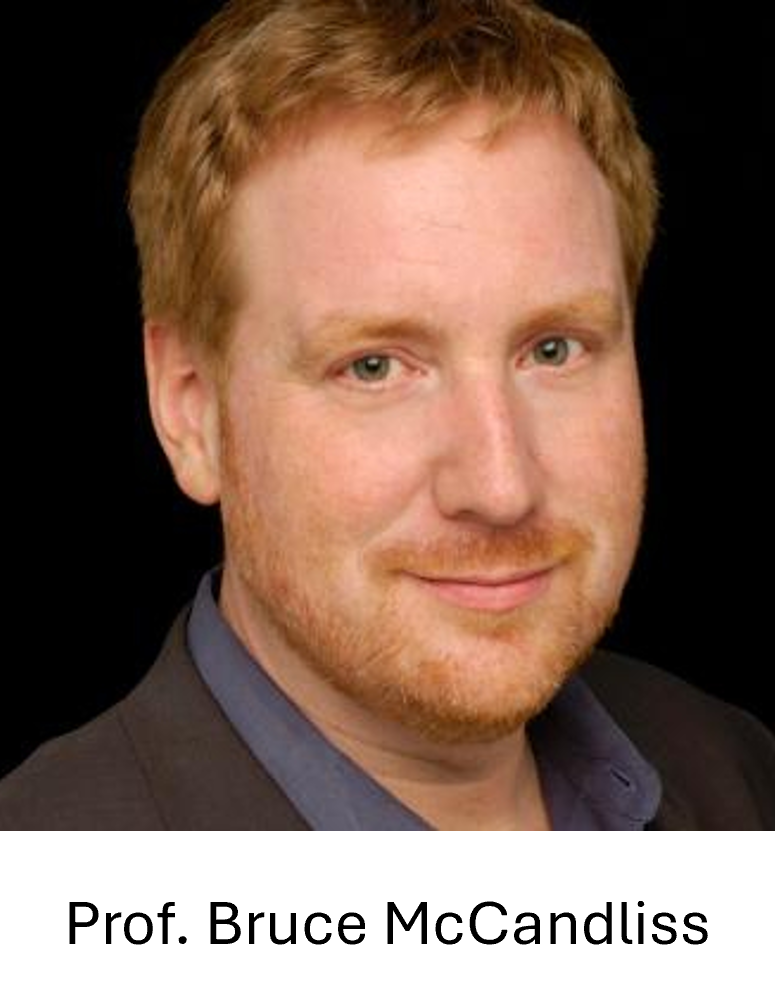 The Stanford brain wave study showed that “beginning readers who focus on letter-sound relationships, or phonics, increase activity in the area of their brains best wired for reading,” and provided “some of the first evidence that a specific teaching strategy for reading has direct neural impact.”
Perhaps more importantly, participants who learned by phonics “elicited neural activity biased toward the left side of the brain, which encompasses visual and language regions. In contrast, words learned via whole-word association showed activity biased toward right hemisphere processing,” which focuses learning through feelings and imagination.
The McCandliss study showed that students taught to read by methods other than phonics are more likely to rely on their feelings and, as Layne puts it, “crucially, their imaginations, to determine and remember words and their meanings.” She adds that “feelings and imagination are subjective, changeable, and prone to manipulation,” which is obvious today in the behavior of college students who twist the meaning of words in academic debates to fit their viewpoints, or simply “toss around a big word salad.”
Layne emphasizes that there are many studies on the effects of reading instruction methods on the brain, and a consistent finding is that “phonics trains the logical, critical thinking parts of the brain, while other methods tend to center on the emotional and imaginative parts of the brain.” Phonics is also more neurologically efficient, allowing for precision in choosing words with which a story is told, whereas critical thinking is “stunted” when any approach other than phonics is used to teach reading.
Inability to comprehend
While English majors at American colleges and universities might be expected not only to read the books and poetry assigned to them in their coursework, but to understand them as well, a study at two Kansas universities proved otherwise.
In Project MUSE - They Don’t Read Very Well: A Study of the Reading Comprehension Skills of English Majors at Two Midwestern Universities, 85 English majors were asked to read the first seven paragraphs of Charles Dickens’ Bleak House and then translate them into “plain English.” Test subjects were given access to online resources, dictionaries, and even allowed to use their cell phones for information. Facilitators advised them to take their time and even said they didn’t have to complete all seven paragraphs.
The study report states that all the test subjects were able to read words on a page, but “the majority of this group did not enter college with the proficient-prose reading level necessary to read Bleak House or similar texts in the literary canon.” After the tests were analyzed, researchers grouped the results into “three reading categories of reading abilities: problematic, competent, and proficient.”
Results showed:
- 58 percent (49 of 85 subjects) understood so little of the introduction to Bleak House that they would not be able to read the novel on their own. However, these same subjects (defined in the study as problematic readers) also believed they would have no problem reading the rest of the 900-page novel.
- Problematic readers often described their reading process as skimming and/or relying on SparkNotes [study guides].
- The majority of the 85 subjects used vague generalizations to summarize compound-complex sentences.
- 38 percent (or 32 of the 85 subjects) could understand more vocabulary and figures of speech than the problematic readers. These competent readers, however, could interpret only about half of the literal prose in the passage.
- Only 5 percent (4 of the 85 subjects) had a detailed, literal understanding of the first paragraphs of Bleak House, which means they could successfully read the text and explain its meaning to the facilitators.
Despite the fact that these test subjects were majoring in English, the researchers nonetheless made allowances for Dickens’ “rhetorical style,” which they acknowledged was “unfamiliar” to their test subjects and required “making imaginative leaps and consistently thinking on a higher level.” Even so, they found that “none of the subjects in the problematic category had the reading skills to meet this challenge.”
Layne attributes the “poor reading tactics” of the study subjects directly to the critical literacy they had learned throughout their K-12 school years. She points out that even the competent readers did not understand what they were reading, and thus were performing exactly as they had been trained.
Study authors noted that the 38 percent of “competent” test subjects who could not define certain words and/or skipped words they did not understand were nevertheless “comfortable with their confusion.” They often made arbitrary guesses or “skipped” a problem section and moved on. Of particular note here is that while these students could have looked up any words they didn’t understand, they neglected to do so.
Inability to write
The inability to think critically translates into an inability to write, which was the central theme of Layne’s video. Readers trained in critical literacy are unlikely to analyze a topic and write about it in a thoughtful, intuitive way, giving their own perspective and opinions. They are more likely to, as Layne puts it, “write what they are supposed to, and they’re paying very close attention to ‘generative themes’ and all those generative words like ‘wealth,’ ‘slums,’ ‘fascism,’ ‘race,’ ‘gender,’ ‘capitalism,’ ‘colonialism,’” etc.
Because readers trained in critical literacy learn to rely on external sources to tell them how to evaluate or interpret a given text, so also as writers they rely on another authority to ensure they are thinking, perceiving, feeling, and “writing” the right way about a topic. Layne observes:
- It’s not just that they want to conform, although that’s a factor, but they have not been taught to understand or even find meaning in text by their own authority and power. Never mind what this means for free expression and individual thought, there is zero room for creativity to grow organically ... even in a world where everything is about feelings, those feelings cannot come from a person’s own mind, but must be fed into their minds, much like loading software into a computer.
The tragedy for these young people and for American society in general is that they are losing out on how to think critically in the true meaning of the term, which has enabled millions of Americans of previous generations to achieve greatness in business, industry, the arts and sciences, and yes, in literature.
Layne suggests readers sample the prose in award-winning older books and compare it to the writing in books that have been chosen as award winners in recent years. She promises there will be a lack of rhythm and flow in the latter as compared to the former, which she says most writers were able to achieve effortlessly before the reforms that replaced phonics instruction with whole language. Generally, the prose of writers in past decades included subtler meanings and deeper insights that provided an enrichment lacking in today writing.
Although a return to phonics, renamed “the science of reading” (see Education Reporter, May 2025, December 2023, and June 2022), holds promise for at least a modicum of public school students, the advent of AI programs such as ChatGPT make a resurgence of truly good written prose unlikely to take place.
Layne advises that anyone wishing to become a “good” writer turn off or delete from their computers any and all AI assistance. As for K-12 students currently steeped in critical literacy classes, she offers no answers other than to urge parents to homeschool if at all possible. She warns that, however bad observers think the public school system is, “it’s worse,” and yet she believes the lack of reading ability is “fixable.” She points out that even parents who aren’t good readers themselves because they weren’t properly taught can improve their skills using a phonics program, and in turn teach their children how to read.
The good news from Education Reporter’s standpoint, aside from the few public schools actually employing “the science of reading,” is that homeschooling and other education alternatives are continuing to grow. As long as most homeschools, microschools, and at least some private and charter schools are teaching students to read using phonics, all is not lost.
Editor’s Note: Adults and older children can become better readers using Phyllis Schlafly’s proven Turbo Reader, available from Phyllis Schlafly Eagles. Young children will learn best with First Reader.
Want to be notified of new
Education Reporter content?
Your information will NOT be sold or shared and will ONLY be used to notify you of new content.
Click Here
Return to Home Page