
McMahon to Teachers: You Don’t Have to Pay Union Dues
In a Feb. 11 YouTube video, U.S. Education Secretary, Linda McMahon, reminds public school teachers that the June 2018 U.S. Supreme Court ruling in Janus v. AFSCME allows them to avoid paying dues to the teachers’ unions no matter what state they live in. “Public employees, including teachers, cannot be required to join or pay a union as a condition of employment,” McMahon explains. “This [law] was a huge win for American workers. No employee should feel obligated to turn over their salary to a union that is bankrolling political causes.... If you choose to stay, that’s your call, but the point is, it’s your call.”
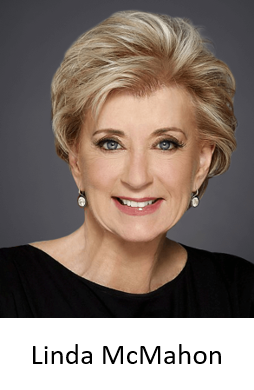 The secretary took the opportunity in her video to reemphasize the Trump Administration’s efforts to return the responsibility for education to the states and subsequently to parents. But some observers wonder if she may have had another reason for reminding teachers about the 2018 law.
For example, given that the teachers’ unions have proven themselves more radically leftist than ever, Trump’s education department may find it expedient to remind teachers that they are not required to fund these radical organizations with their paychecks.
A recent Fox News opinion piece observed: “Teachers unions like the National Education Association (NEA) and the American Federation of Teachers (AFT) aren’t prioritizing educators or their students. They’re bloated bureaucracies more interested in politics than pedagogy. Take the NEA — less than 10% of its more than $400 million annual budget actually goes toward representing teachers in the workplace.”
As has been exhaustively reported for decades, the lion’s share of teachers’ union dues is spent on radical left political causes that have nothing to do with education. For example, teachers in Chicago, IL pay about $1,400 annually in union dues, according to The Center Square.com, but the Illinois Policy Institute reports that less than 20% of the union’s spending is actually used to support its members.
Education Reporter has described the unions’ radical behavior and policies for decades, particularly as conducted at their annual conventions. At last July’s NEA Representative Assembly (RA), union leadership ranted about “fighting Trump” and promoting “Diversity, Equity, and Inclusion” rather than discussing ways the attending teachers might improve their students’ dismal NAEP scores.
Anti-ICE activism
Earlier this month, the president of the Minneapolis chapter of the AFT, Marcia Howard, bragged that she and local elected officials have been part of “anti-ICE Signal chats.” Signal is an application individuals and groups can use to communicate with each other, allegedly with a high degree of privacy. Last year, President Trump’s cabinet members were accused of compromising national security on a Signal group chat, so how secure the app may be is anyone’s guess.
Be that as it may, the online We Got This Covered.com (WGTC) quoted Howard brazenly revealing that “elected officials and even ‘our bosses’ aren’t just sympathetic to anti-ICE activity, they’re actively involved.” She added: “Our bosses are in the Signal chats with us ... Our elected officials are in the chats with us.”
WGTC observed that these revelations make it “crystal clear just how deep the [anti-ICE] coordination goes.” The article explained that Howard, an English teacher for 25 years, “played a prominent role during the 2020 riots in the city following George Floyd’s death. She is even described as a ‘steward’ of the George Floyd Square memorial area. She meets with local activists there every single morning.”
The article provides ample evidence that the head of the AFT’s Minneapolis chapter is highly invested in a coordinated political network of subversive activities that have nothing to do with teaching children English Language Arts.
Howard’s “leadership” is a perfect example of why Secretary McMahon’s caution to teachers about halting the payment of their dues to these radically political organizations is so apropos, especially now. The truth is that the teachers’ unions are little more than extensions of the far-left arm of the Democrat party.
Debunking the myths
One reason teachers may continue paying dues even if they resent the rising costs and/or disagree with their union’s political rhetoric is that they fear they must in order to keep their jobs, their salaries, and other perks of their employment. Teachers are often portrayed as underpaid and the overarching belief is that being part of a union is beneficial.
 But an article in Frontpage Magazine paints a different picture. “Teachers may not get rich, but they live comfortably middle-class lives,” the article shows. “Plus, teachers get to retire a couple of years earlier than other workers.” Frontpage explained that the public’s perception of teacher compensation is consistently too low—by about 50%, or about $22,000 as of the 2021-22 school year.
The organization Just Facts reported that during the 2021-22 school year, “the average school teacher also received another $34,090 in benefits (such as health insurance, paid leave, and pensions), which brings the total annual compensation to over $100,000.” But the question remains, would this be true without the influence of the unions?
Frontpage charges that while the teachers’ unions claim they are needed to raise the “peon’s wage” of educators, various researchers showed between 2009 and 2011 that “Teachers in non-collective bargaining districts actually earned more than their union-protected peers....” A 2018 study by University of California San Diego professor Augustina Pagalayan reported that “collective bargaining agreements (CBAs) do not improve teacher pay.”
Another myth the unions promote is that it is difficult for teachers to leave. Those who wish to quit can do so, but only during brief time periods. As Frontpage explains, the unions often “obscure” these “windows” of opportunity wherein teachers can make their exit, and thus many become “sucked in for another year.”
Although teachers’ unions muddy the waters as to when the windows of opportunity occur for withdrawal, interested teachers are getting the message that escape is possible. A 2025 article on Education Next provides advice and guidance to educators wishing to opt out. (See also Education Reporter, November 2024.)
In November 2023, longtime union watchdog, Mike Antonucci, posted an article on The 74.com describing how the California Teachers’ Union (CTA), the most influential in the state, had lost its edge in recruiting new teachers. Antonucci explained that during the five-year period following the Janus ruling in 2018, the CTA lost twice the number of new union members, from 18,000 new non-member teachers in 2019 to 36,000 new non-member teachers in 2023. And this was in addition to the nearly 3,000 teachers who dropped their memberships during the same time frame.
But teachers need not surrender their union memberships without having an acceptable alternative. For example, a viable option is one of the independent, non-partisan teachers’ associations such as KEYTA, the Keystone Teachers Association, which offers membership to teachers in Pennsylvania and Delaware.
KEYTA’s website notes that more teachers are deciding they don’t want to be associated with their large, expensive, partisan, three-tiered, bureaucratic unions and are looking to join smaller local associations. The website states:
- Over the past few years, the teachers unions have lost large groups like the Memphis-Shelby County Education Association in Tennessee, the Carmel Teachers Association in Indiana, the Santa Rosa Professional Educators in Florida, and the 20,000-strong bargaining unit of the Clark County Education Association in Nevada. These groups now operate their own local-only teachers unions.
These types of organizations not only appear to offer viable options for teachers, but also fall in line with the Trump Administration’s vision of reinstating local control of public education.
Rescuing teachers
Frontpage reports that the NEA’s financial filing covering the 2022-23 school year “shows that the union spent $10 million more on politics and lobbying than it did on representing its members....” This is hardly the type of representation many teachers rightfully expect for the dues they are required to pay.
It’s time to rescue more teachers. Education Secretary McMahon’s next video might consist of a tutorial on how union members can successfully cancel their memberships, and publicize the options that are available with which to replace them.
Want to be notified of new
Education Reporter content?
Your information will NOT be sold or shared and will ONLY be used to notify you of new content.
Click Here
Return to Home Page