
Homeschooling Boom Continues
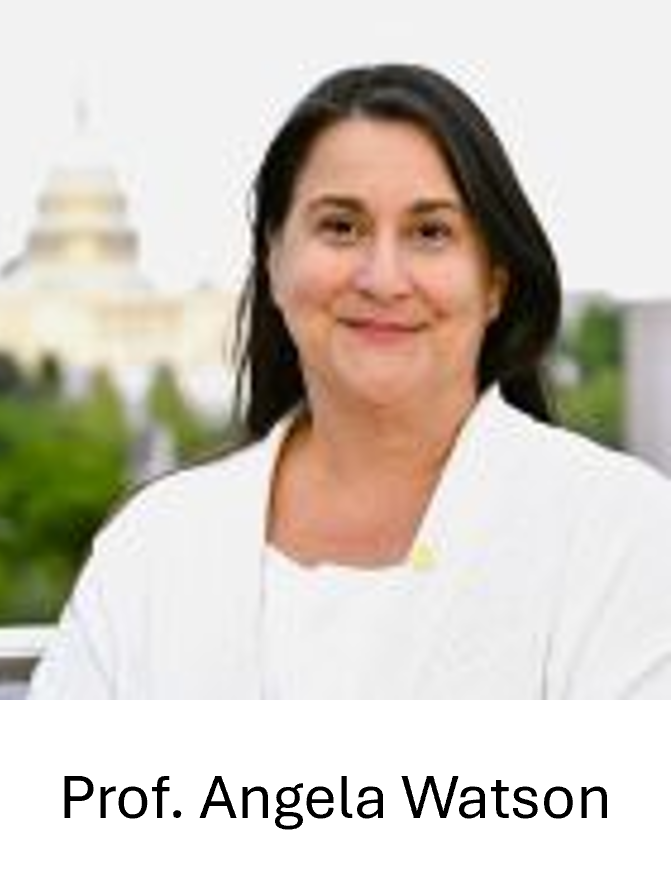
In a December email to her subscribers, the Foundation for Economic Education’s (FEE) Kerry McDonald called attention to a new report on homeschooling by Dr. Angela R. Watson of Johns Hopkins University’s Institute for Education Policy. Watson’s key finding is that during the 2024-25 school year, “homeschooling grew at an average rate of 5.4% nationally—far exceeding the 2% growth rate in pre-pandemic years.”
Professor Watson reiterated what has become common knowledge, that homeschooling boomed during the COVID-19 pandemic and then declined slightly once brick-and-mortar schools reopened in late 2020 and early 2021. The 2023-24 school year showed a rebound for homeschooling, but the big news is its impressive growth during 2024-25.
The report shows 36% of states that collect homeschooling data “recorded their highest homeschool enrollment numbers ever — exceeding even the peaks reached during the pandemic.” Only Hawaii and Tennessee showed a decline in homeschooling.
Highs and lows
Watson points out that her report is based on data collected and disseminated by states that require homeschoolers to register, in most cases with their local school districts, and that only these families are counted. She notes: “There is no guarantee that all homeschool families report. Conversely, it is also unlikely that families would falsely report homeschooling while their children attend traditional schools. Therefore, we consider these counts as the minimum number of homeschooled students in each state.”
 Another consideration is that reporting states include students who attend microschools, an option that has become popular in the post-pandemic years, but is not homeschooling in the strict sense of the word. However, some children who attend microschools are partially educated at home. (See Education Reporter, November 2023 and March 2025.)
Of course, not all states require homeschooling families to register. Watson shows that 21 states do not report homeschooling numbers, and that 82% of the states that do report showed homeschooling increases during 2024-25. “In some cases,” she notes, “the increase is small. For example, homeschooling in Louisiana only grew by 1% over the previous year,” yet Louisiana is one of the states showing continuous year-over-year growth.
Some states experienced double-digit growth, including New Hampshire (14.5%), Vermont (17%), and Maine (10.8%). Another of the states that has experienced sustained year-over-year growth, South Carolina, recorded the highest percentage of growth at 21.5% in 2024-25. Watson reports that Georgia, Minnesota, Nebraska, North Dakota, Ohio, and South Dakota all recorded their highest growth rates ever.
FEE’s McDonald observes that as homeschooling continues to grow, so does it spread by word-of-mouth, which helps create networks and opportunities for resources, and opens the door to alternative educational options many parents may not have otherwise considered. “Additionally,” McDonald writes, “the proliferation of low-cost microschools and other schooling alternatives make it easier than ever for families to choose the homeschooling option while enrolling their children in a learning community for all or some of the week.”
It’s certain that, as the current education year moves into 2026, more data will be gathered and disseminated on the homeschooling phenomenon, and Education Reporter will provide updates. As Professor Watson writes: “We’re seeing something remarkable here. Homeschooling growth is nearly triple the pre-pandemic rate and shows no signs of slowing down. This isn’t a pandemic hangover; it’s a fundamental shift in how American families are thinking about education.”
Johns Hopkins Homeschool Hub
Many resources exist for homeschooling families, and the Johns Hopkins Institute for Education Policy’s Homeschool Hub is one of them. The Hub bills itself as “a one-stop resource for current information on homeschooling data, regulations, and research across the United States ... All fifty states — all in one place.”
 Watson explained in an October 2025 YouTube interview that Johns Hopkins does all manner of education research. She explained that since she had already captured homeschooling numbers for each state in her research prior to the pandemic, she was tapped to write a report on the topic. This report triggered the suggestion that she make her database available to the public.
Watson’s research “became the impetus for the Homeschool Hub concept,” with the original intent merely to make her data available to other researchers, media, and stakeholders. When asked how the Hub evolved from its earliest stages, she explained, “We decided we needed a page for each state, and thought that, while we’re at it, we might as well include [homeschooling] policy and requirements by state.”
The professor and her team have continued to add data, such as information about military families and homeschooling, about gifted and talented students and homeschooling, and more. “We kept adding information both per outside requests and as we saw a need,” she said, “and we’re running as fast as we can to get everything on the HUB as quickly as we can because the demand has just been incredible.”
Watson is currently researching homeschooling for special needs students in order to identify specific resources available to such children on a state-by-state basis. She and her team at Johns Hopkins’ Homeschool Research Lab continue to collect data, and “will publish new results as they become available.”
Want to be notified of new
Education Reporter content?
Your information will NOT be sold or shared and will ONLY be used to notify you of new content.
Click Here
Return to Home Page