
Then and Now: Lost Courses, Lost Traditions, Lost Childhood
In the not-too-distant past, schools were less focused on political activism, gender ideology, and test scores, and as a result, there was time for classes like shop, vo-tech, home economics, typing, and the arts. Students spent their high school years taking for granted such things as driver’s ed, basic computer skills training, and senior class rings.
Of course, the majority of students today have been using computers since they were toddlers, but for those who haven’t, a course in basic skills could still be helpful. And driver’s education in the junior and senior years of high school taught students more than just how to safely operate a motor vehicle, it also familiarized them with traffic signage and laws and instilled a sense of responsibility.
 As for class rings, the high school tradition that began at the U.S. Military Academy in West Point in 1835 has, for the most part, become irrelevant. According to multiple sources, more than 50% of high school seniors purchased class rings during the 1980s, while less than 20% do so today.
An article on msn.com by Diego Pérez Morales bemoaned the loss of “essential high school courses,” including home economics and financial literacy, which he writes “were once a cornerstone of high school education for Baby Boomers.” He laments that the move away from such courses “has resulted in a generation less prepared for practical life tasks, such as cooking healthy meals or managing personal finances.”
Woodworking and metal shop were also once common, and provided useful, hands-on skills that could serve students well later on. Some schools also offered mandatory classes in “life skills” and “civics.” Loss of the life skills classes, Morales cautions, “leaves some students unprepared for the complexities of adult life.” That stories abound today of young people living in their parents’ basements after high school and college, unable to provide or otherwise fend for themselves, lends truth to his observation.
During the 1950s and early 1960s, high schools had designated smoking areas where students could smoke during lunch breaks. And until about 1970, many high schools had supervised firearms training and safety programs. Such concepts are unthinkable today, with anti-smoking and anti-gun laws in place for decades.
Although schools still teach a form of civics, it is often blended with other subjects, such as math, science, and social studies. Known as “action civics,” “new civics,” or “civics for all,” this version of the subject is more likely to teach “radical activism” in lieu of the traditional civics classes to which Morales refers. (Also see Education Reporter, October 2025.)
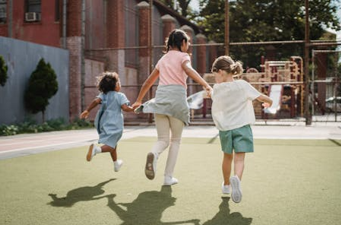 But education reflects the culture, or perhaps the culture reflects education. Children once spent their summers enjoying unstructured play on playgrounds, fields, and in backyards, and learned to resolve conflicts with minimal adult interference.
While there were sports teams and many children participated, the rigorous schedule of multiple practices and games involving multiple sports, plus the other structured programs and activities common today did not exist for most kids. According to an article on NCVRO.com: “Modern psychology suggests that those unstructured, unsupervised experiences may have quietly cultivated a kind of resilience that is less common among children today.”
Morales also bemoans the loss of “regular school-sponsored teen dances” and themed events that were supervised and fun and to which students looked forward. He wrote: “These dances offered a chance to socialize in a safe environment.” Now, homecoming and graduation related events are the only ones taking place at most high schools.
While reviving the lost courses and traditions on a grand scale may not be feasible, schools in such varied locations as Georgia and California are reintroducing shop classes, and there is little doubt that the education system overall is changing.
More than a million students have left traditional public schools in recent years for homeschooling, private schools, microschools, and charter schools. Parents are demanding the return of traditional teaching in lieu of progressive activism. Across the country, there is dissatisfaction with the status quo of low test scores and weak academic performance.
Then there is the Trump Administration’s continuing effort to dismantle federal meddling in education and return it to the states. Parents and conservative activists have an opportunity to take control of education and reestablish its original intent: to raise literate, moral, and responsible citizens capable of maintaining a free society.
Want to be notified of new
Education Reporter content?
Your information will NOT be sold or shared and will ONLY be used to notify you of new content.
Click Here
Return to Home Page