
A Tale of Two Schools & the Growth of Classical Education
Tragedy and triumph are terms that fairly describe the stark contrast between two public schools: one an inner-city school in Chicago and the other a public charter school in Lewisville, Texas. While these are just two examples among the nearly 96,000 public schools in the U.S., they represent both the worst of education in the bluest cities and the best in the diverse world of charter schools.
Chicago’s Frederick Douglass Academy could be a poster child for the most dysfunctional public schools in the country. A Fox News op-ed by Heritage Foundation research fellow and Americans for Fair Treatment senior fellow, Corey DeAngelis, called the Frederick Douglass Academy High School a “ghost school” among many similar schools in the city. He writes: “Built to accommodate 1,008 students, the school now enrolls just 27, yet it remains open with 28 full-time employees — more staff than children.”
DeAngelis explains that in 2024, spending at Douglass “exceeded $93,000 per student, and [this] figure excludes capital outlay and debt service, pushing total expenditures even higher. Despite this lavish funding, the latest state data from 2024 reveal not a single 11th-grade student proficient in math or reading,” proving that extravagant spending yields no positive results in student achievement. And nearly half of the 27 students fail to show up “with any regularity, turning the building into little more than an expensive daycare for a handful of kids....”
While the Frederick Douglass Academy may represent the worst of Chicago’s broken public education system, it’s merely the tip of the iceberg. DeAngelis reports that more than half of Chicago Public Schools (CPS) are “underutilized,” with 145 school buildings more than half empty, and 24 operating “at over 75% vacancy.” He notes that since 2019, “CPS has lost 10% of its student enrollment, yet staffing has ballooned by 20%, inflating costs without improving results. In 2024 alone, 80 public schools in Chicago reported zero students proficient in math, and 24 had zero proficiency in reading.”
Who’s to blame?
Clearly, public education is failing miserably in the city of Chicago, and the cost is astronomical in both financial and human terms. In the face of this disaster, the powerful Chicago Teachers Union (CTU) maintains its stranglehold on the CPS, fighting common-sense attempts to close schools that are virtually empty and championing ICE protests and other far-left political causes in lieu of teaching academics. (See Education Reporter, October 2024.)
 A staunch supporter of school choice, DeAngelis laments that, in 2023, “the CTU successfully lobbied to kill Illinois’s Invest in Kids scholarship program, which had provided school choice options to over 9,000 children from low-income families ....” The union “prioritized monopoly control over student opportunity,” and also led a successful effort to cap the number of charter schools allowed to operate in the city.
The enormity of the debacle would almost be laughable were it not for the fact that children are being sacrificed, including some of Chicago’s most vulnerable. Schools are emptying because many inner-city parents have managed to flee to the suburbs. But as DeAngelis writes: “Shuttering the 24 most vacant schools alone could save tens of millions annually, freeing resources for class-size reductions, technology upgrades or merit pay in high-performing buildings.”
Despite overwhelming evidence, the CTU continues to rail against such sensible moves, calling them attacks on public education, while the system continues to deteriorate. Billions of dollars are wasted and students remain illiterate, with some failing to attend school at all.
Sadly, the situation in Chicago is not unique. Similar circumstances prevail in many big-city schools, especially in blue states. Typically, teachers’ unions encourage more and more spending on staff and other resources without providing positive results, while liberal politicians ignore or acquiesce in the problem.
A light in Lewisville
About 800 miles southwest of Chicago in Lewisville, Texas, a city on the edge of the Dallas-Fort Worth metroplex, is the Founders Classical Academy, a public charter school that emphasizes the rigor and discipline common in classical schools.
Established in 2012, Lewisville is the oldest of the 23 Founders’ Classical Academies located primarily in Texas and Arkansas. In January, the Wall Street Journal published a story by James Traub describing the school and its network. Traub visited the school in September 2023, where he learned that each morning, students from the “lower school,” or grades K-5, meet in the gym to recite a poem or other writing they had memorized. On the day of his visit, he was impressed to witness 4th graders reciting “the Preamble to the Constitution, from ‘We the people of the United States’ all the way down to ‘ordain and establish this Constitution for the United States of America.’”
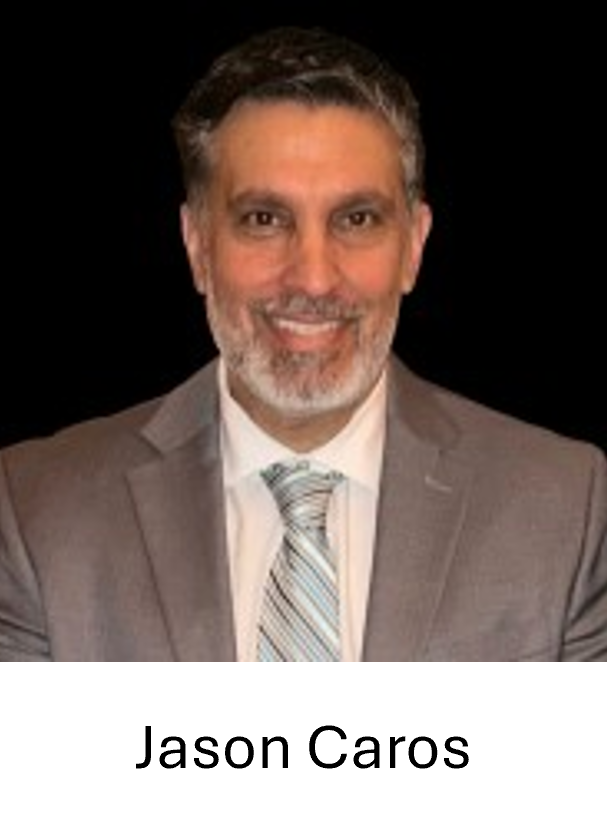 In today’s environment, such a school might expect to be charged with “Christian nationalism,” but Traub wrote that the Lewisville Founders’ headmaster, Jason Caros, rejects this allegation, arguing that “there is much to be said for traditional values, pedagogy and curriculum.” Traub described Caros and the school’s faculty as “working against the grain of a progressive, utilitarian culture that they believe offers too little to children and demands too little of them. The school’s Latin motto is ‘Scientia Virtus et Libertas,’ or ‘Knowledge, Virtue, and Liberty.’” And Founders “does not offer classes in ‘civics’; the school’s very reason for being is civic.”
Founders Classical Academies pledge to not only teach facts, but to pursue “wisdom and virtue.” The website explains that the schools teach “an intentional sequence of content that builds cultural literacy and intellectual depth,” from classic literature and primary sources to science, art, and Latin; i.e., Western Civilization.
Earlier this year, U.S. News reported that in elementary school reading performance, Lewisville’s students “met expectations” while middle school students ranked “well above” expectations in reading. In elementary school math, students ranked “somewhat below” expectations, but by middle school, they were “meeting expectations.” U.S. News based the rankings on cumulative data for the school years 2021-22, 2022-23, and 2023-24.
Like most charter schools, Lewisville’s Founders Academy selects students by lottery. Traub’s article states that the approximately 930 students “aren’t privileged,” with the median family income slightly below the national average. The student population is mixed, and Traub wrote that the traditionalist approach and rigor of the classical curriculum, with its “thick wall against peer and popular culture,” appeal to many immigrant families. The result has been a “much more diverse” student population in the lower grades.
Classical education in demand
Education Reporter has often written on the topic of classical education and the schools that employ it. (See, for example, Education Reporter, April 2025, August 2022, and September 2021.) Many, if not most, are faith-based, some are charter schools, some are private schools, and some are microschools, but all are experiencing renewed interest.
Last month, a report on the popular Fox & Friends morning show explained that the demand for classical education is growing by about “5% each year.” The segment featured as an example St. John’s Catholic academy in Rockford, Illinois. One of the oldest Catholic schools in the country, St. John’s has experienced “a rebound” in enrollment after adopting a classical curriculum.
Diocese of Rockford Superintendent, Dr. Kim White, explained that St. John’s is focusing “on the humanities rather than technology,” with the goal of teaching students how to think critically. “You won’t see tech in the classroom,” White said. “Rather, we teach the children to achieve higher levels of critical thinking” through religion, English Language Arts, and the humanities.
In Chicago, where students are floundering in the politicized maze that is public education, CTU leaders label school choice, including charter schools, “racist” while they send their children to private schools which, as Corey DeAngelis wrote, affords them the options denied to other children. “By blocking closures and choice, the CTU ensures that dollars flow to empty hallways rather than effective classrooms.”
James Traub observed of the Lewisville Founders academy that no one, including the teachers, “ever spoke the words ‘critical race theory’ or ‘woke’ .... No doubt they thought about those things in their private lives, but as classical teachers their concerns lay elsewhere.” But he conceded that classical education is “largely a red-state phenomenon,” typically attracting “conservative families with Christian nationalist identities anxious to place their children in schools that reflect early and mid-20th century values, pedagogy and curriculum.”
Traub further included in his essay what other proponents of classical education have likewise stated, that classical curricula “does not regard individual autonomy as the supreme good. Rather, it believes in what Aristotle called ‘eudaimonia,’ a word typically translated as ‘happiness’ or ‘human flourishing.’”
After all, he observed, “there is a certain kind of education” that must be taught to children, “not because it is useful or necessary, but because it is noble and suitable for a free person.”
Want to be notified of new
Education Reporter content?
Your information will NOT be sold or shared and will ONLY be used to notify you of new content.
Click Here
Return to Home Page