
The Online Newspaper of Education Rights
This Edition: May 2026
Assassination Attempts, Apologies, & ‘Gameplaying’
 The alleged gunman who tried to assassinate President Donald Trump and other high-ranking administration officials at the White House Correspondents Dinner on April 25, was indicted two days later on three counts by a federal grand jury in Washington, DC. Cole Tomas Allen is charged with attempting to assassinate the president, transporting a firearm and ammunition in interstate commerce with the intent to commit a felony, and discharging a firearm during a crime of violence. An additional charge of assaulting an officer or employee of the United States with a deadly weapon was dropped.
But a federal judge is more concerned with Allen’s comfort in the DC jail where he is currently being held than with his crimes. District Court Judge Zia M. Faruqui apologized multiple times to the alleged shooter, calling the jail conditions “unconstitutional” and complaining that Allen is being treated similarly to the J6 defendants, even though he had not been charged with a prior offense.
MoreOminous Assault on Homeschooling in Connecticut
 An anti-homeschool bill has passed the Connecticut House and Senate and will force parents to prove they are not abusive or neglectful before they are allowed to homeschool their children. H.B. 5468 requires parents to pass an abuse and neglect registry check through the Connecticut Department of Children and Families (DCF) before beginning a home education program. Democrat Gov. Ned Lamont is expected to sign the bill into law.
Advocates of the legislation used a familiar tactic to push it through; a particularly horrific, high-profile abuse case known as the Waterbury captivity case involving a child, known publicly only as “S,” who was locked away in a small room for nearly two decades by his stepmother. She allegedly removed him from public school in fourth grade after school officials notified authorities that he was eating out of garbage cans due to hunger. He reportedly has two stepsisters, but they were instructed that the boy “was their secret” and that they were not to discuss him outside the home.
MoreSouthern Poverty Law Center Under Fire
Many agree it’s about time
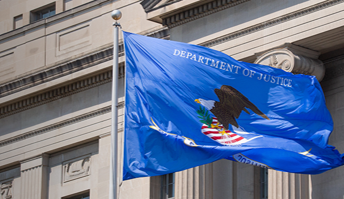 For decades, the Southern Poverty Law Center (SPLC) has worked to subvert American life and values through far-left political action, education, and legal initiatives. Their operatives have lashed out at pro-family, Christian, and parents’ rights groups, labeling them “hate groups” and listing them on their infamous “hate map.” Now, the SPLC stands accused of channeling millions of dollars into the alleged right-wing extremist “hate” groups it claims to so vigorously oppose.
The U.S. Justice Department announced on April 21 that a federal grand jury in Montgomery, Alabama, returned an indictment charging the SPLC with “11 counts of wire fraud, false statements to a federally insured bank, and conspiracy to commit concealment money laundering.”
MoreSouthern Poverty Law Center’s Blueprint
for Communism in U.S. Schools
 The Southern Poverty Law Center (SPLC) has renamed its longstanding curriculum, Teaching Tolerance, to Learning for Justice in its ongoing far-left indoctrination of schoolchildren through a variety of educational vehicles. The SPLC’s influence in education is comprehensive, with woke themes embedded in subjects ranging from math to English Language Arts (ELA) to physical education.
On May 12, the pro-parent organization, Defending Education, posted the results of an in-depth investigation of the SPLC’s Learning for Justice Curriculum in K-12 classrooms. The scope of this destructive, divisive, Marxist/Communist instruction on impressionable schoolchildren is, for many parents, chilling indeed.
More
Book Review
Suicidal Empathy: Dying to Be Kind
by Gad Saad, Broadside Books, 2026
Read
Briefs
- Tennessee has raised the ire of LGBT activists by officially removing the title “Pride Month” from the month of June and replacing it with “Nuclear Family Month.”
- Microschools are continuing to grow in popularity, says a new report by The 74.
- One California university earned a surprising ranking as one of America’s top 25 “most conservative” colleges in the country. More
Be Our Guest:
Contributing Author Essays
Some professors say they’re under pressure not to give F’s
Originally published by The College Fix, April 20, 2024. Reprinted by permission.
Reports focus too much on over-giving A grades ‘when the inflation of an F to a D or a D to a C is the bigger concern,’ University of Utah professor says.
Harvard’s recent grade inflation controversy has renewed concerns about how many students are receiving top marks. But some professors say the deeper problem in higher education isn’t just inflated A’s — it’s the quiet disappearance of failing grades.
By By Leona Salinas, Texas State University
Read
Education Related Links
There are only so many topics we can include in each monthly issue of Education Reporter. So, we are providing links to some additional stories we think may be of interest to our readers.

Get First Reader (for young children), and
Turbo Reader (for older students and adults).
Questions?
Contact education@phyllisschlafly.com
Want to be notified of new
Education Reporter content?
Your information will NOT be sold or shared and will ONLY be used to notify you of new content.
Click Here